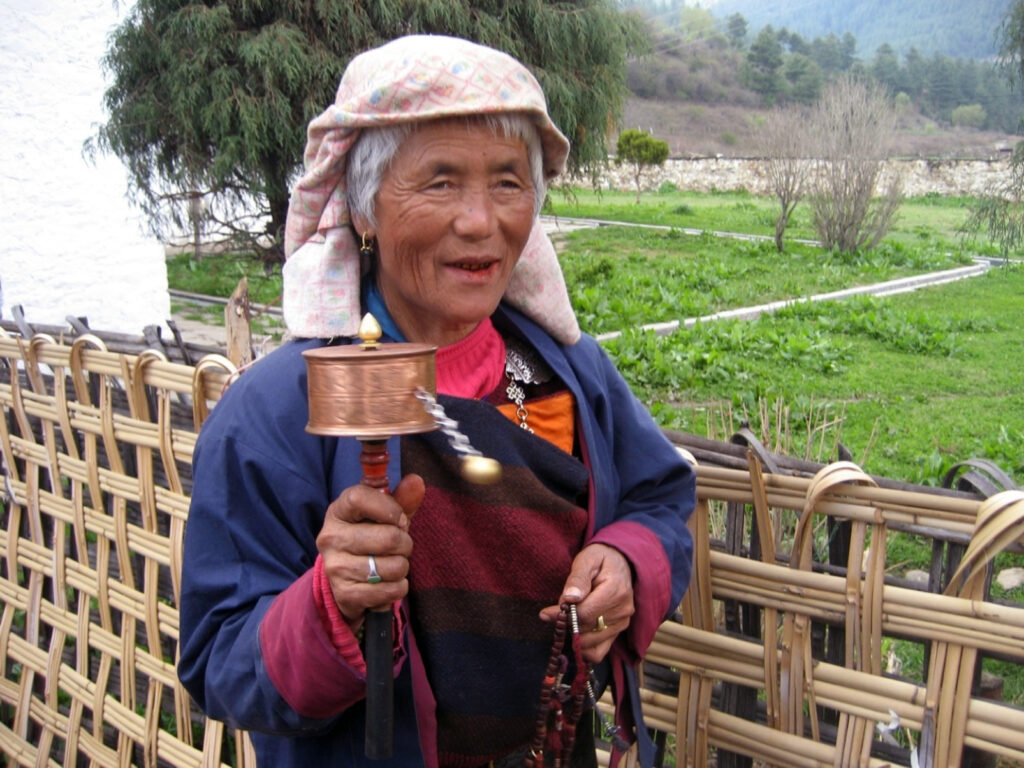


Join us in Bhutan for a once in a lifetime experience
14 – 22 April, 2027

Chicchan 1954-2022
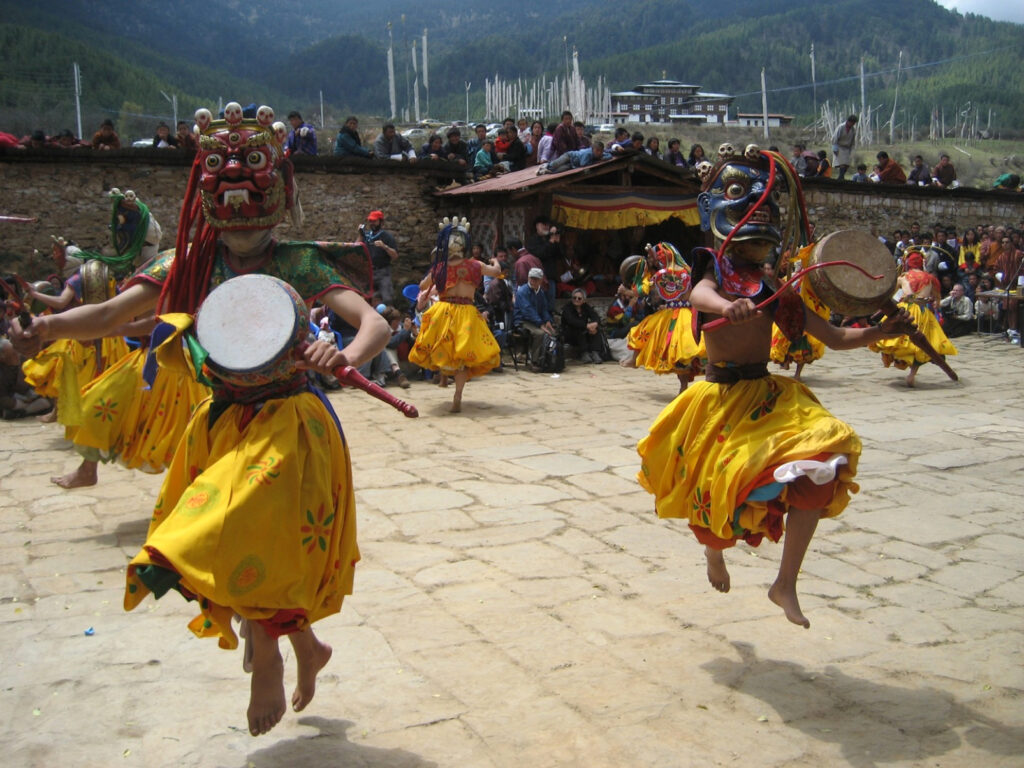
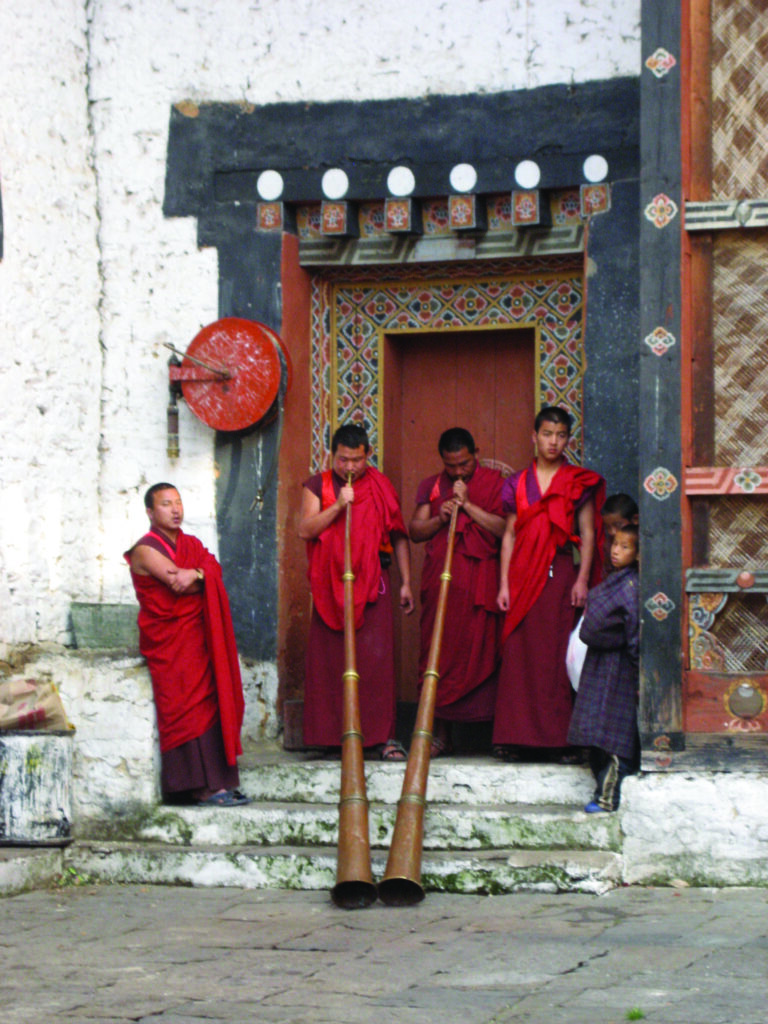
About the Ura Yakchoe festival.
This annual festival is known for its famous dance, Ura Yakchoe. A sacred relic is displayed for people to receive blessings. According to legend, an old woman was visited by a lama asking for a glass of water. When she came out to offer water, the lama had vanished leaving behind only a sack. As she checked the sack, she found a revered statue that is now displayed annually at the Ura festival.
This relic has been pssed on from generation to generations and owned by the descendants of the woman till today. It is a unique community-based festival in Bumthang that dates back to the 16th century.
Outline itinerary.
14th April. Arrive Paro – Thimphu sightseeing Overnight Thimphu. City Heritage Hotel
15th April. Thimphu – Wangdue Phodrang – Gangtey
Overnight Guesthouse TBC
16th April. Gangtey – Trongsa sightseeing – Bumthang (143 km, – 4 hours drive)
Overnight Swiss Guest house
17th April. Bumthang sightseeing
Overnight in Swiss Guest house
18th April. Bumthang – Witness the Ura Yakchoe festival (51 km. 1 hour 50 minutes’ drive
Overnight in Swiss Guest house
19th April. Bumthang – Punakha sightseeing (216 km, 6 hours drive
Overnight in Punatsangchhu Cottages
20th April. Punakha sightseeing – Paro sightseeing (128 km, 3 hours 50 minutes drive):
Overnight in Gonju Boutique
21st April. Paro sightseeing – Hike to the Tiger’s nest monastery (Taktsang):
Overnight in Gonju Boutique
22nd April. Paro – Departure: After breakfast, drive to the Paro International airport and farewell.

Learn more about my Bhutan adventure and the reason for this unique offer.
Detailed itineray
14th April. Arrive Paro – Thimphu sightseeing (54 km, 1 hour drive):
Meet and greet at the airport and drive to Thimphu.
On the way, we stop at Shaba and visit Drakarpo monastery. Guru Rinpoche had meditated in this monastery and many-body prints still stand on testimony. Just below the monastery, one can see a cave where one has to pass through a narrow hole between the rocks to assess one’s acts pious or sinful. In the cave, there is the print of Paksamjoenshing. Besides all, one can see the miraculous footprint of Guru Rinpoche.
A short stop on the way to view Tamchog monastery built Gyalpo in the 15th century by Thang Thong also popularly known as, “The iron bridge builder”. He built 108 bridges across Tibet and Bhutan, out of which 8 were built in Bhutan. His only surviving bridge is in Duksum, Tashi Yangtse in Eastern Bhutan.
While in Thimphu, visit Painting school (School of 13 arts & crafts). As well as Changangkha lhakhang, the oldest temple in Thimphu built in the 1 3th century by Phajo Drugom Shigpo. Dupthob lhakhang, one of the few surviving nunneries in Bhutan. Tallest statue of sitting Buddha in the world (51.5 m) at Kuensel Phodrang.
In the evening, visit Tashichho dzong, seat of the national government and the central monastic body including the summer residence of the chief Abbot. Then free to stroll in the town.
15th April. Thimphu – Wangdue Phodrang – Gangtey (140 Km, 4 hours drive):
After EARLY BREAKFAST, drive to Gangtey / Phobjikha. A short stop on the way to explore the beautiful Dochu la pass (3140 m) with 108 stupas. If the weather is clear, you can also view the panoramic view of the Himalayan ranges. We drive further and visit the Wangdue Phodrang dzong built in 1638 by Shabdrung
While in Gangtey, visit the Gangtey monastery built in 1613 by Gyaltse Pema Thinley, the grandson and mind reincarnation of Pema Lingpa. The present abbot, Kunzang Pema Namgyal is the ninth re-incarnation. After lunch, (Optional) hike the Gangtey nature trail (4 Km, 2 hours). You can see the beautiful view of Phobjikha valley below.
Explore Phobjikha valley (Altitude 3000 m). The most beautiful glacial valley in the Himalayas and the roosting ground of the rare black- necked cranes in winter.
16th April. Gangtey – Trongsa sightseeing – Bumthang (143 km, – 4 hours drive):
After breakfast, drive to Bumthang. We stop in Trongsa and visit: Trongsa dzong was built in 1644 by Chogyal Minjur Tempa. The First two Kings of Bhutan ruled the country from this ancient seat. As per the tradition, the King of Bhutan is appointed the Penlop (Governor) of Trongsa and then becomes the King. The dzong was strategically built by the ancient rulers to control the trade between eastern and western Bhutan.
After lunch, visit Ta dzong, an ancient watch tower which once guarded the Trongsa dzong from internal rebellious forces and enemies, stands on the edge of the town. The First Governor of Trongsa, Chogyal Minjur Tempa built it in 1652 and has four observation points which resembles Lion, Tiger, Dragon and a Garuda (Eagle). The shrine of Ta dzong is dedicated to the epic hero, King Gesar of Ling. Today, Ta dzong serves as a national museum of the country and the chapel inside is dedicated to Jigme Namgyal who was the Penlop of Trongsa from 1853 to 1870.
17th April. Bumthang sightseei
After breakfast, visit to: Jakar dzong which means “The castle of white bird” was built in 1667 by the Tibetan Lama Nagi Wangchuk. This dzong sits on a small hill over-looking the Chamkhar valley. The dzong played a vital role as the fortress to defend the eastern part of the country. The first king ruled Bhutan from here.
Jambay lhakhang built by King Srongtsen Gampo of Tibet in the year 659 on the same day as Kichu lhakhang in Paro. The temple is visited by Guru Rinpoche who came to Bhutan in the 8th century on the invitation of Sindhu Raja. It is believed that Guru Rinpoche has hidden “Terma” or relics under the temple. In the late October, a famous annual festival is held here and the main event is “Ter Cham” or the fire dance.
Chakar lhakhang is the site of the palace of the Indian king Sindhu Raja, who first invited Guru Rinpoche to Bumthang in the 8th century. Kurjey lhakhang where you can see the body-print of the Guru Rinpoche on the rock housed in this temple. The Kurjey festival is held in June and includes a masked dance that dramatizes Guru Rinpoche’s defeat of Shelging Kharpo.
After lunch, visit to: Kenchosum monastery built in the 6th century, this lhakhang was renovated in 1995 and so it has a modern look to it. Legend has it that the lhakhang contained a large bell that when it was rung, the sound could be heard all the way in Lhasa, Tibet. During the 17th century, the invading Tibetan armies tried to steal the bell but because it was too heavy, they dropped the bell and, in the process, cracked it. It is now on display at the national museum in Paro.
Tamshing lhakhang (Temple of the good message), established in 1501 by Pema Lingpa. It is the most important Nyingma monastery because of its direct connection to Terton Pema Lingpa (1450 -1521) and his re-incarnations. In the evening, explore Jakar town. In the evening, explore Bumthang market.
18th April. Bumthang – Witness the Ura Yakchoe festival 51 km. (1 hour 50 minutes drive)
In the morning, drive to the beautiful Ura valley (51 km. 1 h our 45 minutes drive). On the way, visit “Mebar Tsho” or the Burning lake. According to legend Terton Pema Lingpa had a vision of the sacred treasures that Guru Rinpoche had hidden within the lake centuries earlier. However, the people of Tang and the local ruler were cynical of his claims. In order to prove his claims, Pema Lingpa held a butter lamp in his hand as he jumped into the lake. After remaining under water for a long time he re-emerged holding a chest and a scroll of paper with the butter lamp held in his hand still burning bright. Thereafter, the lake came to be known as Mebar Tsho (The Burning Lake). Today, this small fresh water lake is a pilgrimage site for the Bhutanese. Drive further to Ura valley and witness the Ura Yakchoe festival.
We also visit the Ura temple which is about the size of the national library at Kawajangsa Thimphu. It was built in the 1986 on the site of an old temple which was in a bad condition. Packed lunch will be served. You can interact with the locals and see the local lives of village people. In the evening, drive back to Bumthang and free to stroll in the town.
19th April. Bumthang – Punakha sightseeing (216 km, 6 hours drive):
After early breakfast (7 am), drive to Punakha. After lunch, we visit: Chimi lhakhang also called the “Temple of fertility” built in 1499 by Lama Drukpa Kuenley, also popularly known as “Divine madman”. He travelled through-out Bhutan and Tibet as a “Neljorpa” (Yogi) using songs, humor and outrageous behavior to dramatize his teachings of salvation through sex. Punakha dzong, was built in 1637 by Shabdrung Ngawang Namgyal. Punakha is the winter residence of Je Khenpo (The chief abbot of Bhutan). Punakha is also an ancient capital of Bhutan until the rule of the second king of Bhutan.
The first national assembly of Bhutan was convened here in 1957. Then we walk across the longest suspension bridge in Bhutan across Pho chu river. This bridge is considered the longest of its kind in Bhutan and connects the two sides of the Pho chu river. You will get a great view of the river, valley, temple, and a good boost of adrenaline as well.
20th April. Punakha sightseeing – Paro sightseeing (128 km, 3 hours 50 minutes drive):
After breakfast, drive to Paro. We occasionally stop on the way to take pictures. Stop at the viewpoint where you can see the bird’s eye view of Paro airport and the valley.
Then visit a typical Bhutanese farmhouse and explore. You can also try archery /dart. After lunch in the farmhouse, visit: Kichu lhakhang built in 659 A.D by the Tibetan King Srongtsen Gampo. He built 108 temples in a single day to pin the ogress to the earth forever and at the same time, convert the Tibetan people to Buddhism. Six of these temples lie in Bhutan; most prominent of them are Jambay lhakhang in Bumthang and Kichu lhakhang in Paro. Dzongdrakha monastery: It is often called the mini Taktsang monastery as it is built on a cliff face in the village of Bondey in Paro. As such, Dzongdrakha literally translates into the ‘The temple on a cliff’. To get there, it takes about 20 minutes by car from the main Paro valley. Located at an altitude of 2227 meters, the temple was built in the 16th century. It is one of the many places Guru Rinpoche meditated in.In the evening, free to stroll in the town for shopping and photography.
In the evening, free to stroll in the town.
21st April. Paro sightseeing – Hike to the Tiger’s nest monastery (Taktsang):
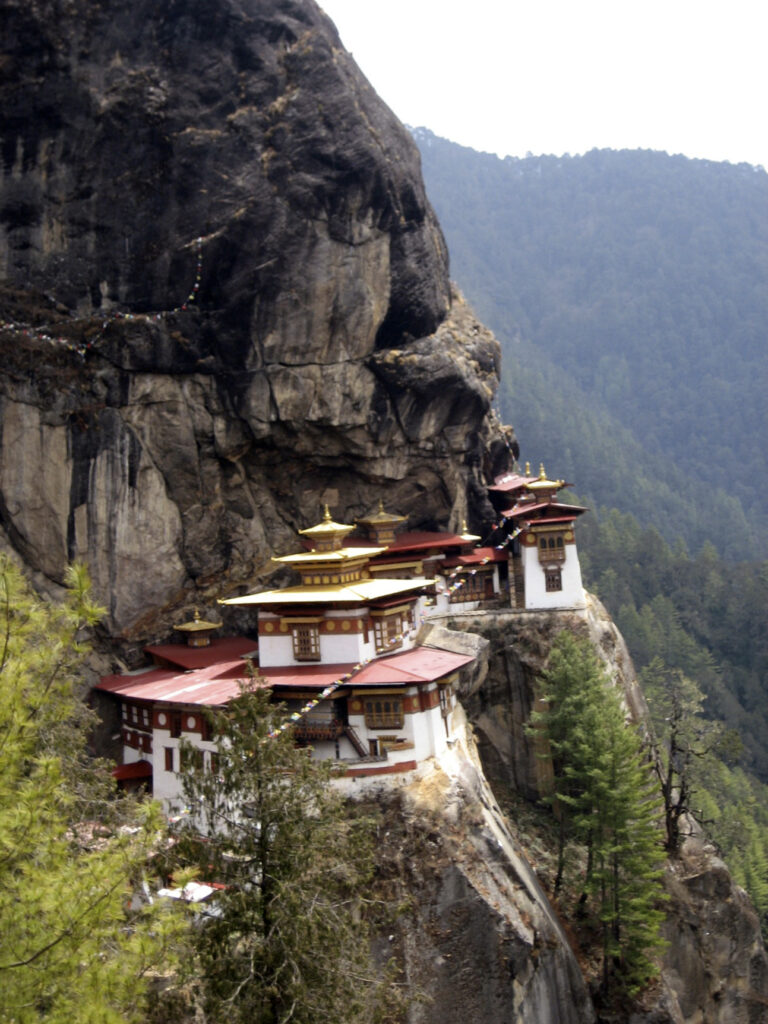
In the morning, drive to Paro & 4 hours hike to the Tiger’s nest monastery (Taktsang). The primary temple was built around Guru Rinpoche’s meditation cave in the 1684 by the Penlop (Governor) of Paro, Gyaltse Tenzin Rabgay. This incredible monastery clings to the edge of a sheer rock cliff that plunges 900 meters into the valley below. Legend has it that Guru Padma Sambhava, the tantric mystic who brought Buddhism to Bhutan flew here on the back of a flying tigress, Dorji Drolo, said to be his favorite consort.
NB: You can hang prayer flags near the Tiger’s nest and offer prayers inside the monastery.
In the afternoon, visit to: Drugyel dzong built in 1647 by the Shabdrung Ngawang Namgyal. It served as the defense post against the Tibetan invasion in ancient days. This dzong was destroyed by an accidental fire and is under repair now. In the evening, free to stroll in the town for shopping and photography.
22nd April. Paro – Departure: After breakfast, drive to the Paro International airport and farewell.